
From the Director: February 2026
By Professor Owen Atkin, Director, ANU Agrifood Innovation Institute
It has been a particularly busy start to the year here at AFII.
We began the month with a visit from the ANU Chancellor, the Hon Julie Bishop, who joined us for a roundtable discussion on how ANU is reshaping the future of agrifood systems in Australia and globally. It was an excellent opportunity to showcase how AFII is drawing together ANU’s strengths across the sciences, engineering, policy, economics, law, social sciences and the humanities to address the complex and interconnected challenges facing agrifood systems.
This month also saw the release of our report, Advancing Biocontrol in Australian Agriculture: opportunities and regulatory pathways. The report is the outcome of a workshop in December that brought together experts from industry, government agencies, research organisations, research development corporations, and growers to examine the barriers limiting the uptake of biological control products. These include natural enemies and microorganisms, such as predators, parasitoids, bacteria, fungi, and viruses, used to manage agricultural pests and weeds. The report outlines the key challenges identified and sets out the advisory group's recommendations across the short, medium, and long-term to strengthen Australia’s biocontrol system.
As temperature records continued to be broken across the country, the impacts of extreme heat on agrifood systems remained at the forefront of our minds. An article published in The Conversation - Intense heatwaves directly threaten crops and native species - which I co-authored- examined how intense heatwaves directly threaten crops and native species. Heat stress at critical growth stages disrupts pollination, reduces yields and places significant pressure on ecosystems. When temperatures exceed plant tolerance thresholds, photosynthesis slows, reproductive processes fail and productivity declines. For agrifood systems, this translates into reduced output, rising input costs, increased irrigation demand and heightened risk across the value chain. Keep an eye out for a future ABC SA Country Hour radio segment that explores the issues we raised in the Conversation article.
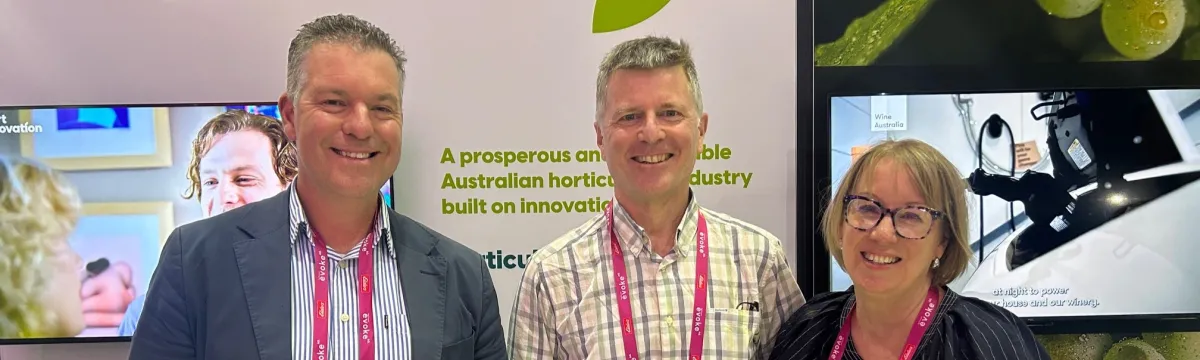
I travelled to Melbourne in mid-February to attend evokeAG 2026, one of Australia’s leading agrifood innovation events. A consistent theme across the program was the relationship between research, development and impact, and the growing pressure for research to more directly meet industry needs. There was discussion across the two days about whether investment should prioritise research or adoption.
My view, reinforced by the discussion, is that this is not a choice between one or the other. World class fundamental research, such as that undertaken at ANU, remains essential. As La Trobe University Chancellor John Brumby emphasised, a well-funded research sector is critical if we are to respond at pace to the accelerating impacts of climate change, even where that requires acting with less than perfect certainty. At the same time, as Brett Hosking from Victorian Farmers Federation argued, stronger investment is needed in adoption-focused, commercially oriented initiatives to create on-the-ground impact.
For me, the challenge is not to prioritise research over adoption, but to better align policy and funding settings so that discovery connects more effectively to application, enabling our research capability to deliver meaningful, system-wide impact.
Following evokeAG, I attended EPAC2026 – an event organised by the Australian Pesticides and Veterinary Medicines Authority (APVMA). The focus of EPAC2026 was on harmonising regulatory frameworks across OECD countries to enable more effective application of crop protection products – conventional chemistries or biocontrol agents – using precision agriculture tools. A take-home for me was how precision application technologies are dramatically reducing total chemical use. While great, these advancements pose challenges for regulators in determining how to account for technological developments when assessing applications for the registration of new products.
As we continue to gallop into the year of the horse, AFII isn’t slowing down. This week, I will be attending the ABARES Outlook conference alongside AFII Advisory Board members Victoria Taylor and Ben Fargher. These forums provide such a valuable opportunity to engage with policymakers, industry leaders and researchers on the future direction of Australia’s agrifood sector.
We will also mark International Women’s Day in collaboration with the ARC Future Crops Centre and the ANU Gender Institute. We look forward to welcoming Brondwen MacLean and Lyndall Strazdins to share insights into the opportunities and challenges for women in agrifood and research environments. Tickets are still available for the International Womens Day 2026: Careers in an evolving world event on this Thursday 5th March at AFII.
There is so much underway, and much more ahead. I encourage you to subscribe to our email updates or follow us on LinkedIn to stay connected with AFII’s work.


