
From the Director: January 2026
By Professor Owen Atkin, Director, ANU Agrifood Innovation Institute
Record heat – the future is here
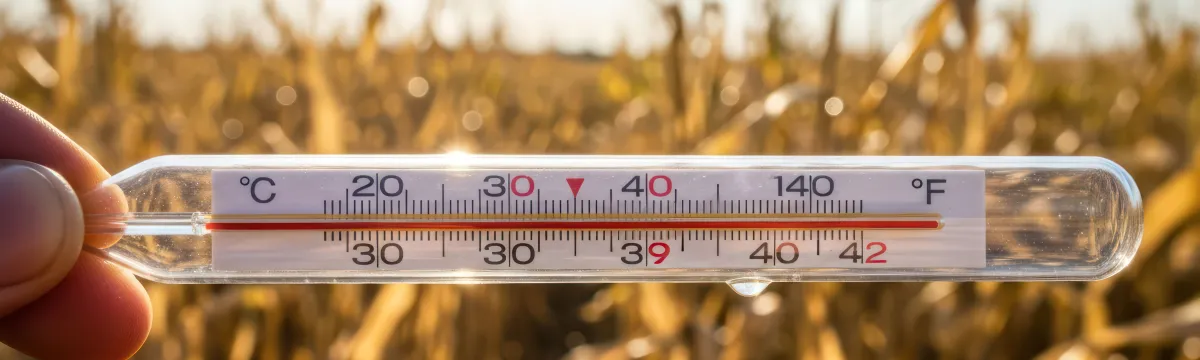
January 2026 has shown that Australia’s agrifood system is now being stress‑tested at a continental scale. Record heatwaves across western and south‑eastern Australia placed extreme pressure on people, infrastructure and the landscapes that anchor our food production. In Carnarvon, growers faced close to $1 million in crop losses as bananas, mangoes and avocados quite literally boiled during three consecutive days of high‑40s heat. Closer to home, Renmark reached 49.6°C, while soil surface temperatures climbed even higher — a colleague recorded 65°C during the peak of the event. Such landscape‑scale extremes expose deep vulnerabilities in how Australia produces, transports and stores food.
Because these challenges are global, adaptation will require coordinated international science and strategy. As Chair and lead organiser of the 47th New Phytologist Symposium — Extreme Heat: Extending the Thermal Limits of Life (June 2026, Córdoba, Spain), I am helping convene researchers from around the world to understand how extreme heat affects plants and other organisms central to ecosystem productivity and food systems. Discussions will span plant metabolism, phenology, biotic interactions and microclimate management — all critical areas for building the heat‑resilient agricultural systems Australia will increasingly depend on. This global effort positions AFII, and ANU more broadly, to contribute to the science needed to keep food systems functioning under unprecedented climatic pressures.
Fuel security is food security — and both are part of achieving net zero
Late last year, the Australian Government committed $1.1 billion to accelerate domestic low carbon liquid fuels (LCLF) production through the new Cleaner Fuels Program, explicitly linking low‑carbon fuels to national fuel security and the decarbonisation of hard‑to‑electrify sectors such as agriculture, where diesel is needed for machinery, irrigation, freight, and cold chain logistics.
To achieve genuine fuel and food system stability, Australia must find new ways of providing the feedstocks needed to make diesel. In 2026, AFII will work with ANU researchers and partners to identify innovations that increase Australia’s capacity to produce industry‑grade oils without compromising food production — including crops that can accumulate oils in seeds and leaves. Recognising that LCLF markets will depend not only on feedstocks and refining capacity but also on credible emissions accounting, AFII will also support the development of frameworks to track and verify emissions from Australian‑made clean fuels.
Biocontrol and system reform
Australia’s agrifood sector faces intensifying pressure to modernise crop‑protection systems as resistance, residue requirements and sustainability expectations grow. Biological products — microbials, metabolites, RNA‑based approaches and endosymbiont technologies — offer promising options but face significant system barriers.
AFII’s late‑2025 Pathways to Biocontrol workshop convened participants from regulatory agencies, RDCs, industry, growers, researchers and advisers to build a shared understanding of these challenges. The workshop highlighted consistent system‑wide barriers: regulatory ambiguity, limited trial infrastructure, capability shortages, market constraints, behavioural hurdles and unclear classification of dual‑use biologicals — all of which slow innovation and adoption in Australia. A detailed workshop report will be published in the coming months.
Cultivating collaboration
AFII exists to help Australia tackle agrifood challenges that no single discipline or sector can solve alone. We provide a single gateway into ANU’s interdisciplinary capability — spanning plant and environmental science, engineering, data, economics, policy, regulation and social sciences. Whether you are developing credible feedstocks and emissions accounting for LCLF markets, navigating biocontrol adoption pathways or building climate‑ready crops and systems to withstand the extremes we saw this January, AFII stands ready to collaborate.
To learn more about our work, I encourage you to explore our 2025 impact report: ‘Cultivating Collaboration – AFII’s Impact in Driving Agrifood Innovations’.