
From the Director: June 2026
By Professor Owen Atkin, Director, ANU Agrifood Innovation Institute
While winter is settling in across Canberra - frosts on the lawns and ice on the windscreen - I spent the start of the month under very different conditions.
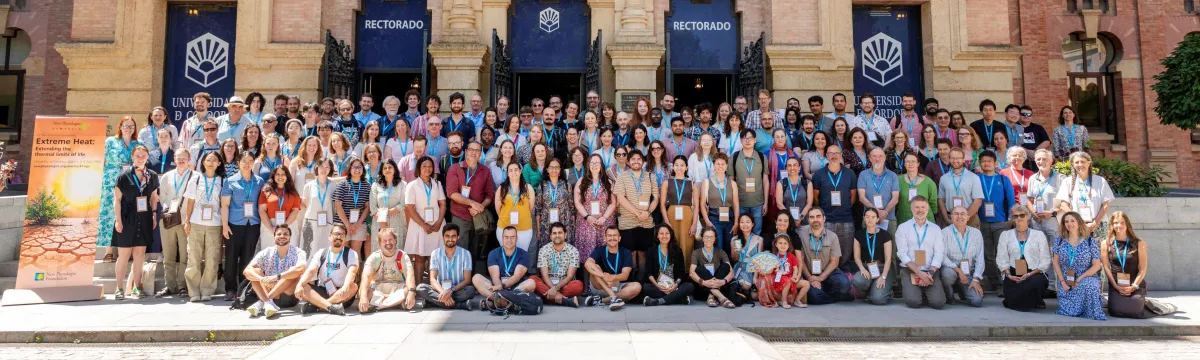
In Córdoba, Spain, I attended the 47th New Phytologist Symposium, Extreme Heat: Extending the Thermal Limits of Life as Chair of the Organising Committee. Location-wise, Córdoba was an appropriate setting for an event focusing on heat, with temperatures near 40°C most days. Our goal was to harness understanding of why some plants tolerate extreme heat better than others as a springboard to developing more heat-resilient food production systems, forests, grasslands and urban landscapes.
What came through clearly over the four days was how close many plants already are to their thermal limits. Extreme heat is not just one another stress layered on top of others. Extreme heatwaves cut across scales, with impacts felt from the molecular level through to whole landscapes. Researchers showed that a plant’s response to heat is closely tied to water. As temperatures rise, plants are forced into a trade-off between cooling through transpiration and conserving the water. Several talks also showed how short, acute heat events can have lasting consequences, even when plants appear outwardly unaffected.
One of the more confronting messages related to reproduction. Pollen development is one of the most temperature-sensitive stages in a plant's life cycle and can be irreversibly damaged by heatwaves that leave the rest of the plant looking perfectly healthy. A crop can stay green and seemingly thriving while its ability to set seed has already been lost. This hidden vulnerability has profound implications for crop yields and for natural systems alike.
Equally important was the insight that ecosystem resilience depends not on individual plants, but on the networks that connect plants to soil microbiomes and pollinators. Presentations at the Symposium highlighted how heat reduces microbial diversity, with negative impacts on plant health. Others showed how the nutritional value of pollen is reduced during heatwaves, with knock-on effects for the health and reproduction of pollinators such as bees. Thus, the effects of extreme heat on food production systems and natural ecosystems can extend well beyond the immediate impacts on plant performance. The Symposium also included time to think about solutions. What struck me was how important it is to support early-career researchers, not only to conduct excellent technical research but also to identify solutions. We need to build the skills to move from the lab to the real-world to be able to genuinely address the critical issues emerging for food and natural systems.
One of the most positive outcomes is an agreement to establish a global consortium of researchers to document the impacts of El Niño-linked heat waves across the world's agricultural and natural systems. Using agreed protocols, this consortium will, for the first time, allow us to compare findings at scale and identify the traits that genuinely confer resilience.
A special collection of papers in New Phytologist and Plants, People, Planet will follow, capturing the full scope of what was presented and debated in Córdoba. Australia, with its exposure to increasingly frequent and severe heat events, has an enormous stake in this work. ANU researchers are well-positioned to contribute and lead.
Back in Canberra, we wrapped up our focus on heat with a webinar. ANU researchers who attended the symposium reflected on their presentations, sharing key advances, emerging challenges, and the areas of opportunity that generated the most discussion in Córdoba. It was a valuable opportunity to bring those international conversations home.
A recording of the webinar and videos from Córdoba are now available on the AFII website.
Following the recent challenges with fuel supply in Australia, we have also been in active conversation with Commonwealth Government policy teams about AFII-supported work on low-carbon liquid fuels and the transport systems that underpin our food supply. What came through clearly is a shift in government focus from managing immediate supply disruptions to addressing longer-term questions of system resilience and transition planning. There is a strong interest in the kind of integrated, evidence-based approaches that ANU is well placed to provide, particularly around system-level modelling, real-world demonstration projects, and understanding the practical barriers to adopting technologies that are already viable. We also discussed the importance of standards and interoperability as electrification scales, and the need for better data and analysis across fuel types, from carbon quantification to lifecycle assessment. These are areas where AFII and our colleagues across ANU can make a genuine contribution to policy. We look forward to continuing these conversations over the coming months.
Closing off the month, AFII convened a Pathways to Biocontrol Roundtable, building on the first workshop held in December. That earlier workshop focused on mapping the regulatory, technical, market and behavioural barriers shaping the development and adoption of biopesticides in Australia. The second workshop has been designed and delivered in close collaboration with government departments and regulators, industry representatives, RDCs and researchers, ensuring that the discussion reflects both policy and real‑world perspectives. It extends the initial work by bringing in international experience, drawing on lessons from other jurisdictions to understand what has worked in practice and why. A key focus will be identifying which insights are transferable to smaller markets such as Australia, and where different regulatory, market or farming system contexts require different approaches. We will post a report on the workshop’s findings in the coming months.
As you can see, it has been a full and productive month.
In the coming weeks, I will head to the North Slope of Alaska to undertake Australian-USA collaborative research on the impacts of climate change on boreal and tundra vegetation. Having completed my PhD on Canadian arctic plants, I am keen to contribute to work that advances our understanding of how rapid increases in temperature affect carbon exchange in this globally crucial biome.