
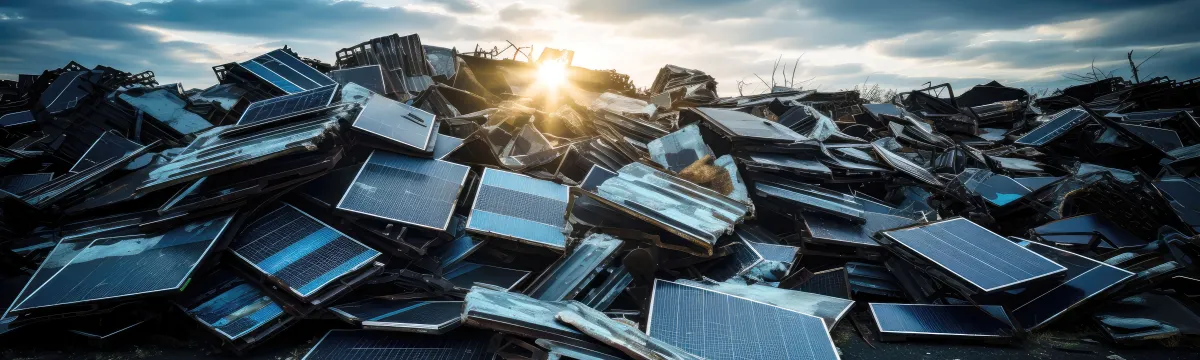
Earth Day 2026: Our Power, Our Planet: Building a Circular Future for Solar Panels
Earth Day invites us to reflect on how people‑powered action, research, and innovation can drive real environmental progress. This year’s theme—Our Power, Our Planet—reminds us that protecting the Earth is not only about generating clean energy, but about how responsibly we use resources across their full lifecycle.
Australia is a world leader in solar energy, with millions of panels installed on rooftops, solar farms and agricultural system nationwide. However, as early systems are upgraded or replaced, a new sustainability challenge is emerging: what happens to solar panels when they are removed?
Many of these panels are still capable of generating electricity yet often end up in landfill. This is not because reuse is unsafe or impractical, but because Australia’s energy and waste systems were not designed with reuse in mind. Rules vary between states, and once a panel is removed it is frequently classified as “waste,” even if it remains functional.
At the The Australian National University, researchers are applying interdisciplinary, solutions‑focused approaches to address this challenge—recognising that technical innovation must be matched with effective policy, economic incentives, and community trust.
ANU researcher Laura Jones, a Lead Analyst in the ANU Centre for Energy Systems (ACES) within the ANU College of Systems & Society and co‑founder of the Circular PV Alliance is a great example of this. Laura is working across engineering, economics, and social science with research that focuses on how renewable energy technologies can be deployed and managed more sustainably across their full lifecycle and advocating for reuse and responsible end‑of‑life pathways for solar panels in Australia.
One of the collaborative projects with ANU PV Lab is tackling Australia’s growing solar panel waste challenge by demonstrating that reuse is both possible and valuable. Using practical, low‑cost, field‑based testing, the project assessed performance, safety, and condition of panels removed from service. The research found that a considerable number of used panels still had meaningful life left and are well suited to second‑life applications, often delivering greater environmental and economic benefits than early recycling.
In practice, this opens up opportunities to deploy reused panels in off‑grid systems, modular energy installations, temporary or seasonal infrastructure and community‑scale energy projects. They are also well suited to farm infrastructure, including irrigation pumping, electric fencing, effluent and water management systems, cold‑chain support, on‑farm processing, sheds, and remote monitoring equipment.
These applications typically require dependable, consistent power rather than maximum efficiency, making verified reused panels a practical and cost‑effective solution. Importantly, reuse can reduce financial barriers for communities and farmers adopting renewable energy.
This work reflects broader ANU research principles that also underpin Agrifood Innovation Institute initiatives such as the Agrifood Energy Transition: taking a whole‑of‑system view, working across disciplines, and collaborating closely with industry, government, and communities to co‑design practical solutions that deliver shared benefits.
From clearer standards for testing second‑hand panels, to improved certification pathways and more consistent definitions of waste, targeted policy and regulatory changes, supported by education, could significantly improve solar reuse outcomes. These approaches align with emerging national product stewardship discussions and state‑based circular economy strategies.
Just as ANU agrifood energy research aims to reduce emissions, cut costs, and strengthen resilience, circular economy approaches to solar panels offer multiple benefits: less landfill, better use of existing resources, and more affordable access to clean energy for community and off‑grid projects, helping power for a more sustainable future in agriculture.