

Indigenous burning partnership rebuilding Country and economic outcomes
At the heart of an Australian National University Indigenous burning project is the integration of science, traditional knowledge and farming, helping to restore degraded grazing land while strengthening cultural and social connections.
The project grew from Dr Kai Chan’s Westpac Research Fellowship, which examined how native plants tolerate drought and heat stress. Seeking to connect laboratory research with real-world practice, Dr Chan reached out to the ANU First Nations portfolio and met Ngambri-Kamberri-Walgalu custodian Paul Girrawah House, who is also a Cultural and Community Engagement Specialist at ANU. Their conversations led to the idea of integrating Indigenous land management practices, such as cultural fire management, with molecular biology techniques to regenerate degraded cattle grazing land. Cultural fire management uses First Nations knowledge and responsibility to care for Country, supporting new growth, protecting native habitat and reducing bushfire risk. The use of fire is a cultural right reflected in several articles of the United Nations Declaration on the Rights of Indigenous Peoples (UNDRIP), which is endorsed by ANU.
Supported by the Agrifood Innovation Institute, the first trial site is a cattle property called Nguurruu near Gundaroo, owned by farmer Murray Prior. Guided by Paul’s cultural knowledge, small-scale, targeted burns have been used to regenerate native grasses and improve soil health.
Dr Chan and his team have established research plots across burnt and unburnt areas to measure ecological and soil changes over time. Soil samples are being analysed for pH stability, bacterial and fungal diversity, and the presence of beneficial microbes that support plant growth and nitrogen cycling. Ongoing genetic sequencing work is mapping how microbial communities shift after burning, providing insight into which fungi and bacteria support the recovery of native vegetation.
Leaf samples are also being collected to study plant species composition and health, allowing the team to track changes in biodiversity. This combination of molecular biology and fieldwork aims to develop a scientific evidence base to evaluate the potential environmental benefits of cultural burning, including improved soil structure, increased native plant cover and productivity gains for grazing systems.
Beyond the science, the project is building relationships between Indigenous custodians and landholders. It has the potential to create pathways for cultural practitioners to care for Country on privately owned land while helping farmers restore land impacted by overgrazing. The long-term vision is to develop a model where Indigenous fire management is recognised as a specialist environmental service, providing both ecological restoration and paid employment opportunities for Indigenous communities.
As Dr Chan notes, the research is as much about people as it is about data. Each burn strengthens trust, cultural exchange and shared learning, demonstrating that traditional knowledge and scientific evidence together can guide a more sustainable and connected future for Australian land management.
Agricultural Bio
Dr Kai Xun Chan is a plant molecular biologist whose research explores how plants sense and respond to environmental stress such as drought, heat and light fluctuations. His work combines molecular biology, plant physiology and biotechnology to better understand how plant cells communicate and regulate resilience to stress.
Kai’s agricultural research focuses on developing crops that are better adapted to the realities of a changing climate and on building links between fundamental plant science and practical land management. Through projects such as the Indigenous Burning Project, he has taken his lab-based research into the field, studying how traditional land management practices influence soil health, microbial diversity and vegetation recovery.
Kai values his collaboration with the Agrifood Innovation Institute (AFII) because of its unique position at the intersection of research, policy and practice. Working with AFII has allowed him to connect plant science with agricultural innovation, biosecurity and sustainability initiatives that have a direct impact on farmers and communities. He describes AFII as a place where cross-disciplinary and cross-sector conversations happen naturally, linking scientists, producers, government agencies and Indigenous leaders to explore new solutions for land and climate challenges.
For Kai, AFII offers more than funding support. It provides the environment to think differently, test ideas across disciplines and access networks that extend beyond academia. Collaborating with AFII has helped him reimagine how plant research can contribute not only to crop resilience but also to the broader goal of sustainable and inclusive agricultural systems.
Cultural Bio
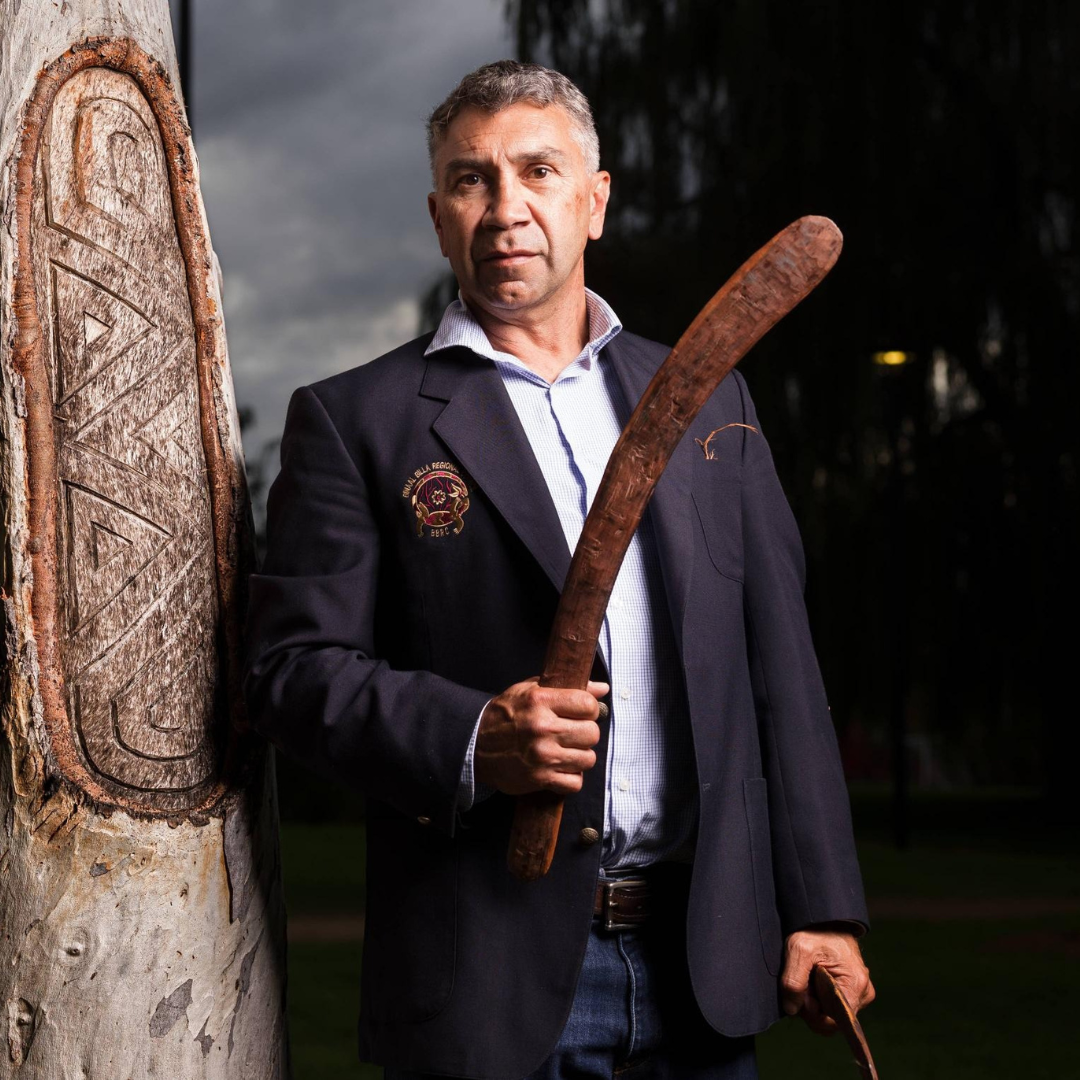
Paul Girrawah House
Paul Girrawah House has multiple First Nation ancestries from the South-East Canberra region, including the Ngambri-Ngurmal (Walgalu), Pajong (Gundungurra), Erambie/Brungle (Wiradyuri), Wallaballooa (Ngunnawal) and family groups. Paul acknowledges his diverse First Nation history, he particularly identifies as a descendant of Onyong aka Jindoomang from Weereewaa (Lake George) and Henry ‘Black Harry’ Williams from Namadgi who were both multilingual, essentially Walgalu-Wiradjuri speaking warriors and Wallaballooa man William Lane aka ‘Billy the Bull’ - Murrjinille. Paul was born at the old Canberra hospital in the centre of his ancestral country and strongly acknowledges his First Nation matriarch ancestors, in particular his mother Dr Aunty Matilda House-Williams and grandmother, Ms Pearl Simpson-Wedge.
Paul completed a Bachelor of Community Management from Macquarie University, and Graduate Certificate in Wiradjuri Language, Culture and Heritage and Management from CSU and Graduate Certificate of Management from ANU. Paul provided the Welcome to Country for the 47th Opening of Federal Parliament in 2022. Paul is a Member Indigenous Reference Group, National Museum of Australia. Paul is a member of the National Gallery of Australia First Nations Advisory Group. Paul works on country with the ANU, First Nations Portfolio as a Cultural & Community Engagement Specialist.
Paul celebrates his cultural ancestry through traditional/contemporary tree carving. Paul’s artwork and practice has extended beyond the traditional use of trees to include carving his ancestral designs and stories into bronze and glass materials.